Why Timor-Leste
A resistance story still living
Asia's youngest nation. The story is recent enough that the people who lived it are still telling it — at the museums, on the mountain trails, and across the kitchen table.
- Asia's youngest nation
- Independence 20 May 2002
- Santa Cruz 12 Nov 1991
- Living memory
Why this story is unusual
- 24 Years occupation 1975–99
- 78.5 % Voted for independence
- 20 May 2002 Sovereign nation
- 2012 UN mission ended
Timor-Leste declared independence on 28 November 1975. Nine days later, Indonesia invaded. What followed was 24 years of occupation, a clandestine resistance movement, the 1991 Santa Cruz massacre that put Timor on world TV screens, and a UN-supervised referendum on 30 August 1999 in which 78.5% voted for independence. The country was burned to the ground by departing militia in the weeks afterwards. On 20 May 2002 it became the first new sovereign nation of the 21st century.
All of that is within living memory. The people who walked guerrilla routes through the mountains, the people who voted in 1999, the people who rebuilt — they are still here, still in their forties, fifties and sixties, still happy to tell you about it if you ask.
Places that tell the story
Museums (indoor, curated)
Documents, photographs, oral histories — the archive of the struggle.
- Chega! Exhibition, Dili
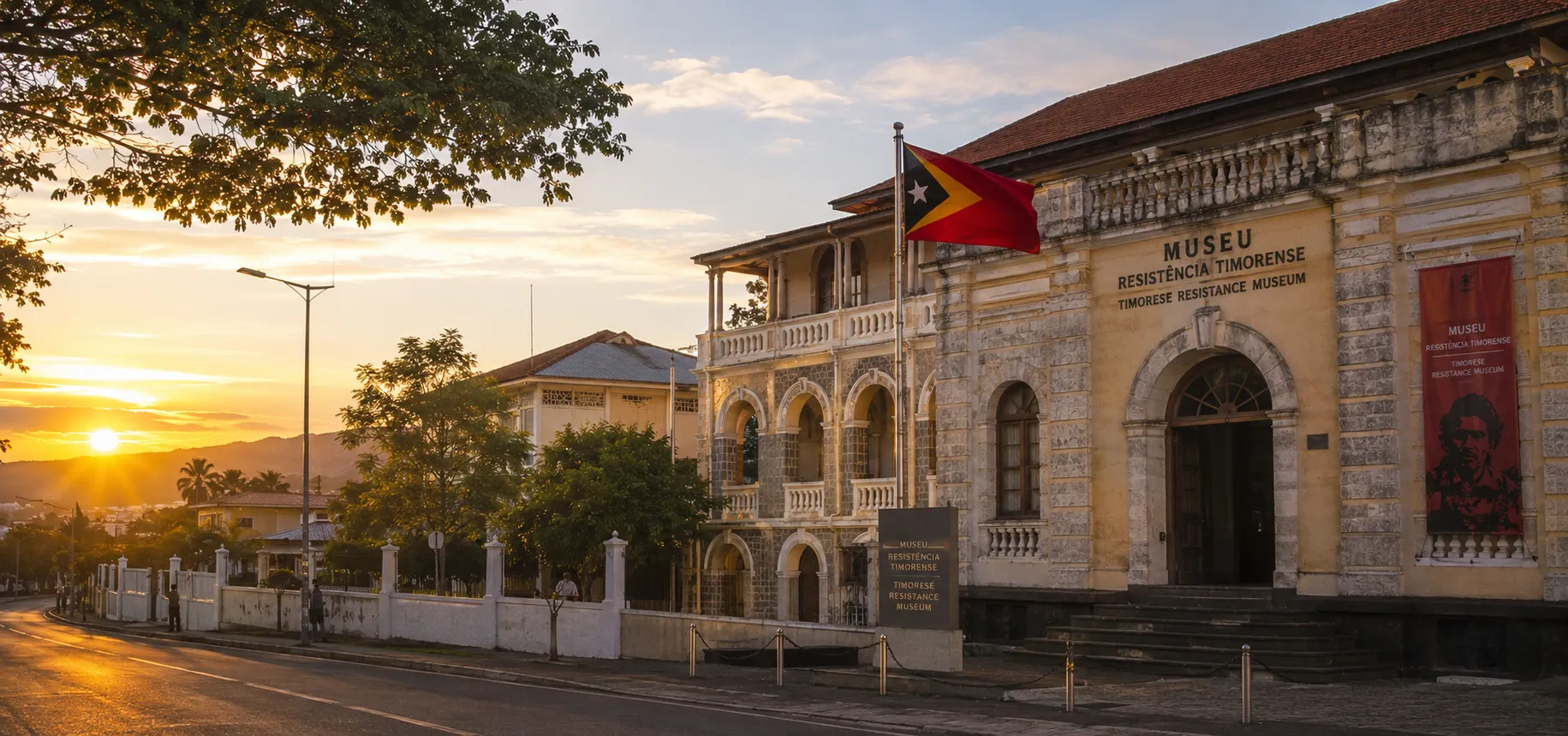
- Resistance Museum, Dili
- Balibo Five House, Balibo
Memorials (open-air, pilgrim)
Walked, climbed, remembered — places where it actually happened.
- Santa Cruz cemetery, Dili
- Cristo Rei sunrise headland
- Mt Matebian — Falintil routes
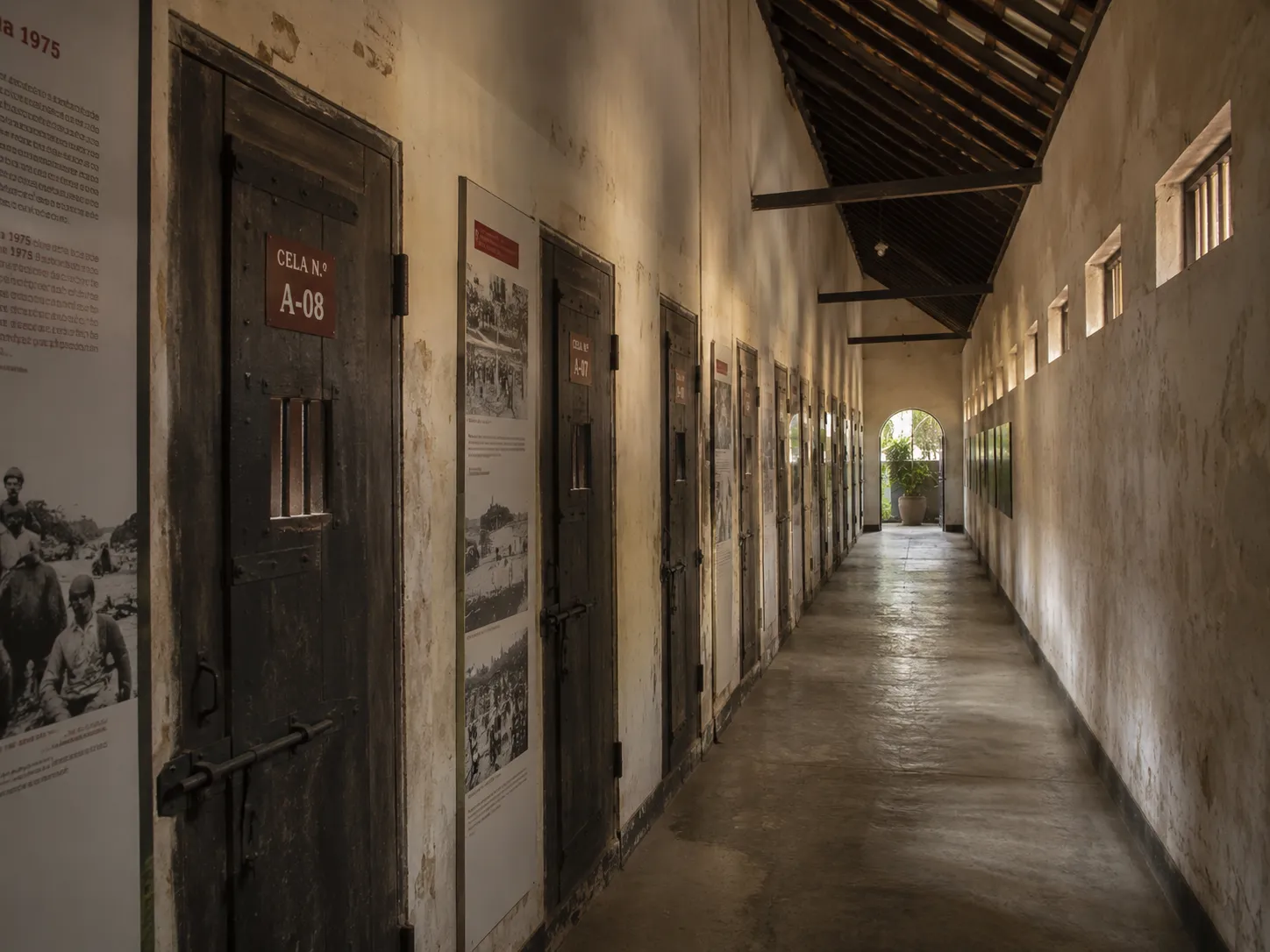
- Chega! Exhibition (Dili): Housed inside a former Portuguese-era prison used by the Indonesian military. The most comprehensive exhibit on the occupation and the resistance. Allow 2–3 hours.
- Resistance Museum (Dili): Modern, beautifully curated museum tracing the 1975–1999 struggle through photographs, weapons, clandestine documents and oral histories.
- Santa Cruz Cemetery (Dili): Site of the 12 November 1991 massacre, where Indonesian troops fired on a peaceful procession. A small memorial sits inside the cemetery. The footage that came out that day changed international opinion on the occupation.
- Cristo Rei (Dili): The 27 m statue gifted by Indonesia in 1996 — and the headland it sits on, used as a symbolic rallying point during the referendum campaign. Sunrise hikes are popular.
- Mt Matebian (Quelicai): Sacred mountain in the east. A stronghold of the Falintil guerrilla resistance during the late 1970s. Walking it is an experience of both landscape and history.
- Balibo Five House (Balibo): The house where five Australian journalists were killed by Indonesian troops in October 1975. Now a community centre and museum.

A short timeline
| Year | Event |
|---|---|
| 1515 | Portuguese traders settle. Three centuries of slow colonisation follow. |
| 1942–45 | Japanese occupation in WWII. Up to 60,000 Timorese die. |
| 28 Nov 1975 | Independence declared from Portugal. |
| 7 Dec 1975 | Indonesia invades. Occupation begins. |
| 12 Nov 1991 | Santa Cruz massacre. International coverage follows. |
| 30 Aug 1999 | Referendum on independence. 78.5% vote in favour. |
| 20 May 2002 | Timor-Leste restores full sovereignty. |
| 2012 | UN peacekeeping mission ends. |

"We did not win because we had more guns. We won because the story would not stop being told — by us, and then by the world." — Falintil veteran, recorded for the Chega! oral history archive
Dates the country observes
- 20 May — Restoration of Independence: Public holiday. Parades, fireworks, big national celebrations in Dili.
- 30 August — Popular Consultation Day: Commemorates the 1999 referendum.
- 12 November — Santa Cruz Day: Solemn commemoration of the 1991 massacre. A walking commemoration sets out from the Motael church.
- 28 November — Proclamation of Independence: Marks the 1975 declaration. Public holiday.
- 7 December — Memorial Day: Remembers the 1975 invasion. Quieter, reflective.
How to engage with the story respectfully
- Many older Timorese lost family members in the occupation. Ask gently before launching into questions; let them lead.
- At museums and memorials, dress modestly and switch your phone to silent.
- A guided tour at the Chega! Exhibition costs USD 5–10 and is well worth it — the guides are often family members of victims and can answer questions thoughtfully.
- Photography is generally welcomed in museums and at outdoor memorials. At Santa Cruz cemetery, photograph the memorial; ask before photographing visiting family members.
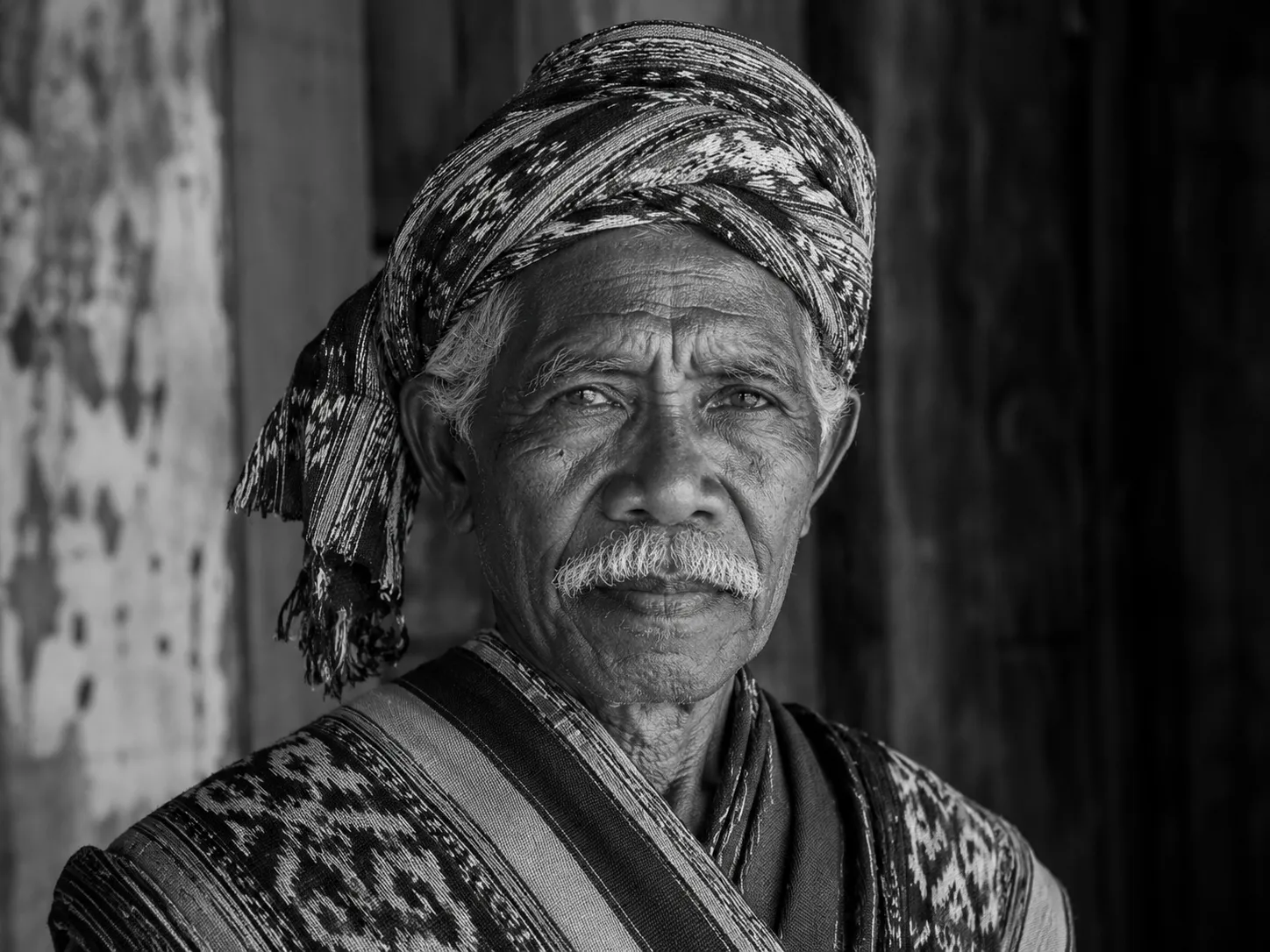
- Resistance veterans (Veteranus da Resistência) wear a distinctive sash on public holidays. They are usually open to talking, but treat the conversation as a privilege, not a service.
Stay in the capital
Most of the major memorials and museums are in Dili. A two- or three-night base in the capital gives you time for the full circuit.
